
AI + Human Hybrid Models: When to Escalate to a Live Agent
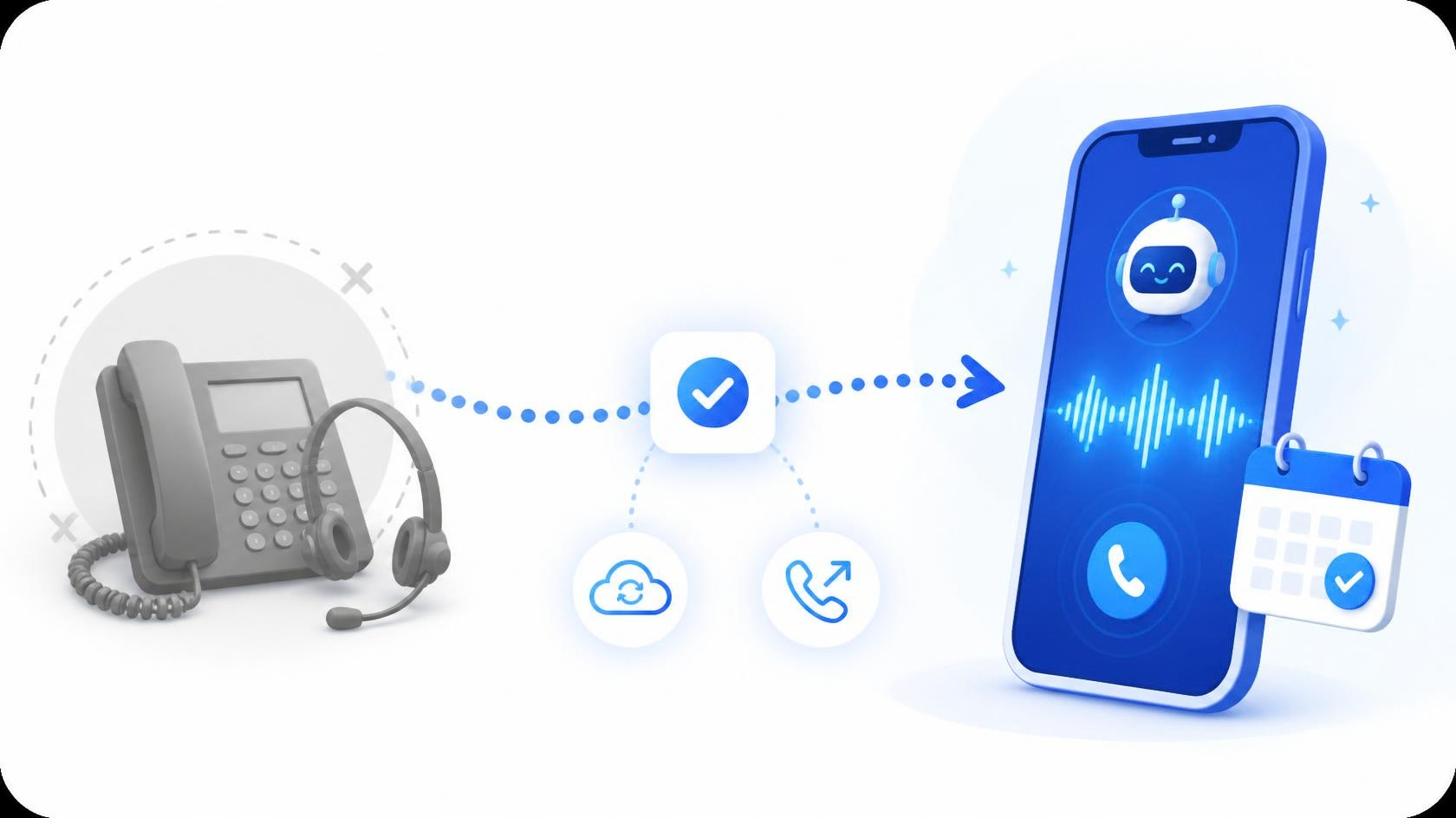
An AI and human hybrid model is a call handling setup where AI answers most calls, and a live agent steps in for the ones that need judgment. This kind of hybrid answering service with AI and live agents covers volume with AI and exceptions with a person. The result is 24/7 coverage without losing the human touch on calls that need it.
The hard part isn't choosing to run a hybrid model. It's deciding exactly when a call should leave the AI and land with a person.
What an AI + Human Hybrid Model Actually Is
A hybrid model pairs an AI voice agent with live human backup on the same phone line. The AI answers every inbound call first, then handles the conversation using your scripts, intake questions, and scheduling rules.
If the call stays simple, the AI finishes. If the call hits a defined trigger, it transfers to a live agent, along with everything the AI already captured. The caller experiences one conversation, not two separate ones.
This is different from a basic answering service with an AI layer bolted on top. A true hybrid answering service has specific handoff rules, and the human agent gets full context before they say a word.
For businesses, the benefit isn't just cost savings, though that's part of it. It's coverage that doesn't force a trade-off:
- Calls get answered 24/7, including nights, weekends, and holidays, without paying overtime for a live team to staff those hours.
- Routine calls get resolved instantly, so staff aren't tied up booking appointments or repeating the same answers to FAQs.
- Sensitive or high-stakes calls still reach a person, so the business doesn't lose the judgment and empathy that automation can't replicate.
- Callers get one continuous conversation, not a transfer that starts over, since the human agent picks up with full context from the AI.
In practice, this means a business can scale call volume without scaling headcount at the same rate, while still protecting the calls where a human touch actually changes the outcome.
Why Hybrid Works Better Than AI-Only or Human-Only
An all-human team gives every caller judgment, but it costs more and can't scale past business hours without overtime. An all-AI system is available around the clock, but it has no judgment for calls involving emotion, ambiguity, or high stakes.
Neither extreme holds up on its own. Callers dealing with something urgent or upsetting don't want to wait through an AI's best attempt before reaching a person. And callers with a routine question don't need a human on the line just to book an appointment or ask about hours.
That's not an argument against AI. It's an argument for building the escalation path on purpose, instead of hoping the AI figures it out mid-call. This is exactly why more businesses are moving toward an AI answering service that keeps a live agent on standby, rather than running AI alone.
What AI Should Handle on Its Own
Before setting escalation rules, it helps to know what AI already does well. Routing these calls to a human wastes time and money on both ends.
- Booking, rescheduling, and canceling appointments
- Intake and qualification questions that follow a script
- FAQs about hours, pricing, location, or services
- Routine follow-ups, reminders, and reactivation calls
If a call fits one of these, it usually belongs with AI. The goal is to reserve human time for calls that genuinely need it, not to limit AI use for its own sake.
Five Triggers That Should Send a Call to a Human
Businesses that get the most out of a hybrid model don't leave escalation up to the AI's best guess. They define specific conditions in advance. Five triggers show up in almost every well-run setup.
- Confidence threshold. If the AI's confidence in understanding the caller drops below a set percentage, that's a sign the conversation is going somewhere it wasn't trained for. Escalating here catches problems before the caller notices anything is wrong.
- Keyword triggers. Certain words should end the AI conversation immediately. Examples include "emergency," "lawsuit," "arrest," or "supervisor," along with any term specific to your industry. These moments are rare but expensive to get wrong.
- VIP or existing-relationship callers. A long-time client or a flagged high-value lead can go straight to a human, regardless of what they're calling about. This is about the experience you want that caller to have, not about what the AI can technically handle.
- Failed-attempt limits. If the AI tries and fails to resolve something two or three times, continuing usually frustrates the caller more than it helps. A failed-attempt cap forces a handoff before the call turns sour.
- Explicit request. If a caller asks for a person, give them one. Fighting this request is one of the fastest ways to make an otherwise good AI call feel evasive.
AI vs. Human: Who Handles What
Every call falls into one of two buckets: the AI can resolve it end to end, or it needs a person's judgment. Here's how that split typically breaks down.
Where AI Handles It End to End
- Scheduling and rescheduling: The AI can book, move, or cancel appointments in real time without putting the caller on hold or waiting for office hours.
- Standard intake questions: The AI walks callers through your scripted intake flow, capturing the same details a human would ask for every time.
- FAQs (hours, pricing, location): The AI answers routine questions instantly, so callers get information without waiting for a callback.
- Appointment reminders and follow-ups: The AI handles reminder and reactivation calls on a set schedule, freeing staff from repetitive outbound work.
Where Human Judgment Is Required
- Distressed or upset callers: A live agent can read tone and respond with empathy in a way that de-escalates the call instead of following a script.
- High-value or VIP leads: A person can tailor the conversation and make judgment calls that protect a relationship the business doesn't want to risk.
- Legal, medical, or safety emergencies: A human can assess urgency and respond appropriately when the stakes are too high to leave to automation.
- Calls the AI has failed to resolve twice: A live agent steps in with full context once it's clear the AI's approach isn't working, before the caller gets frustrated.
- Explicit requests to speak with a person: A human takes over immediately when asked, since refusing the request undermines trust in the whole system.
What a Good Handoff Looks Like
The trigger only solves half the problem. How the handoff happens decides whether the caller notices, and not in a good way.
A well-built handoff sends the human agent full context: who's calling, what they need, and everything captured so far. The agent picks up mid-conversation instead of starting over. The caller isn't asked to repeat their name or their issue.
That last point matters more than it sounds. Making someone re-explain themselves after a transfer undoes most of the goodwill the AI calls built.
h2:Common Mistakes to Avoid
- Escalating too much. If every borderline call goes to a human, you're paying for live agent time on calls the AI could have handled. You lose most of the cost and speed advantage of automating in the first place.
- Escalating too little. The opposite mistake costs just as much. An AI that keeps trying to resolve a sensitive call, because the thresholds are set too loosely, turns a frustrated caller into a lost one.
- Setting rules once and forgetting them. Call patterns change over time. A keyword list that covered your calls at launch might miss a new type of call six months later. Review escalation rules against real transcripts on a regular basis.
- Ignoring agent feedback. Live agents see firsthand which handoffs made sense and which felt unnecessary or too late. Skipping their input means missing the fastest signal you have for tuning escalation rules.
- Treating every location or team the same. A single set of escalation rules applied across multiple locations or departments ignores real differences in call volume, caller expectations, and risk. What counts as a routine call in one location may be a high-stakes one in another.
How to Set Up Your Own Escalation Rules
- List your highest-stakes call types. A law firm's list looks different from a home services company's or a real estate team's. Start with the calls where getting it wrong costs the most.
- Define specific triggers for each one. Use keywords, confidence thresholds, and caller flags that match your actual business, not a generic template.
- Test with real calls before going live. Run the AI against past call transcripts to see where it would have escalated, and adjust from there.
- Review the data monthly. Look at which calls escalated, which didn't, and whether the caller was happy with the outcome either way.